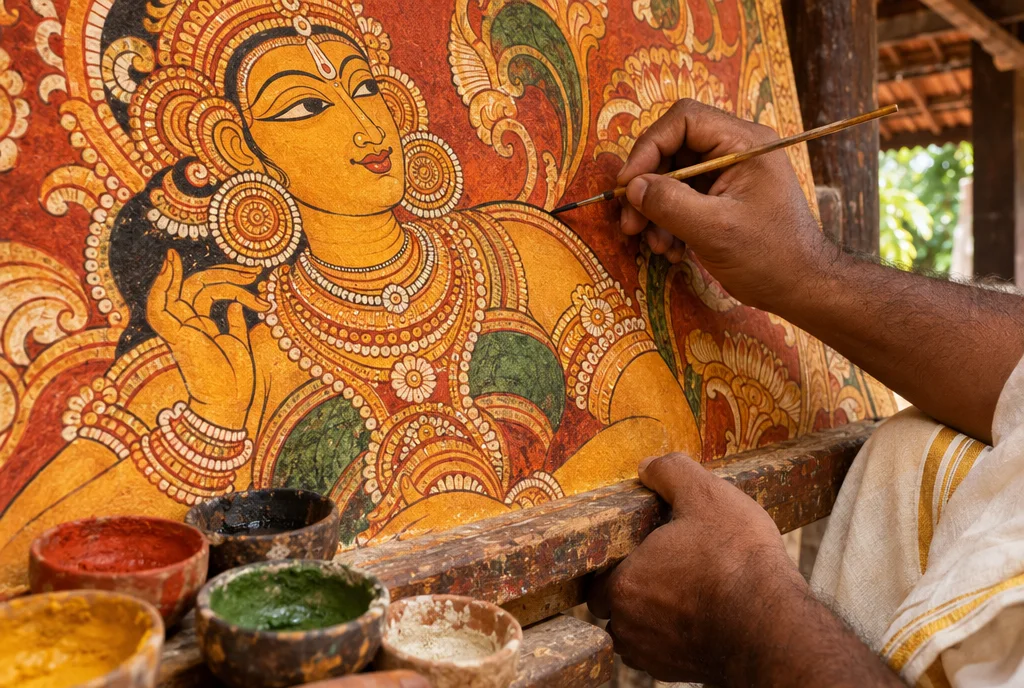
What natural pigment actually costs a mural painter
A traditional mural painter who grinds their own colour can spend days on it before painting anything. Here is where that time goes.
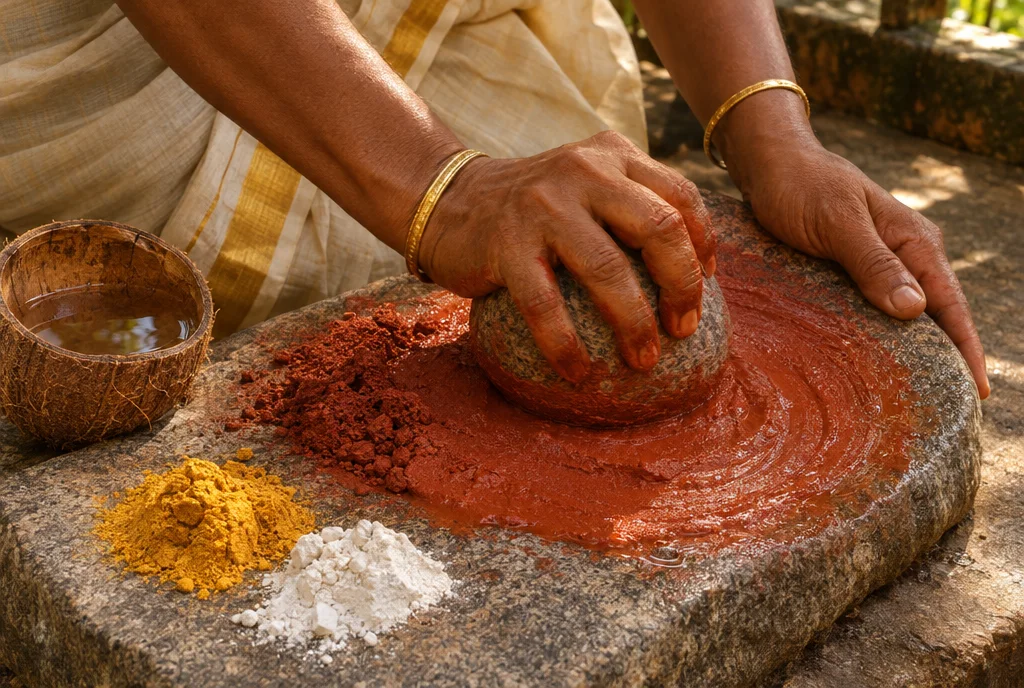
Most painters today open a tube of colour and begin. A traditional Kerala mural painter who still works with natural pigments does not. Before a brush touches the surface, there can be several days of work that nobody buying the finished painting ever sees.
Five colours, all from nature
The traditional mural palette has five colours: red and yellow ochre from the earth, black from the soot of an oil lamp, white from lime, and green from plant sources. Each one has to be collected, cleaned and prepared by hand.
Grinding, a little at a time
Each colour is ground on a flat stone with water and a natural binder, a little at a time, until it moves under the brush without any grain. It is slow, physical work, and it cannot be done in bulk: grind too much at once and it dries out before it is used.
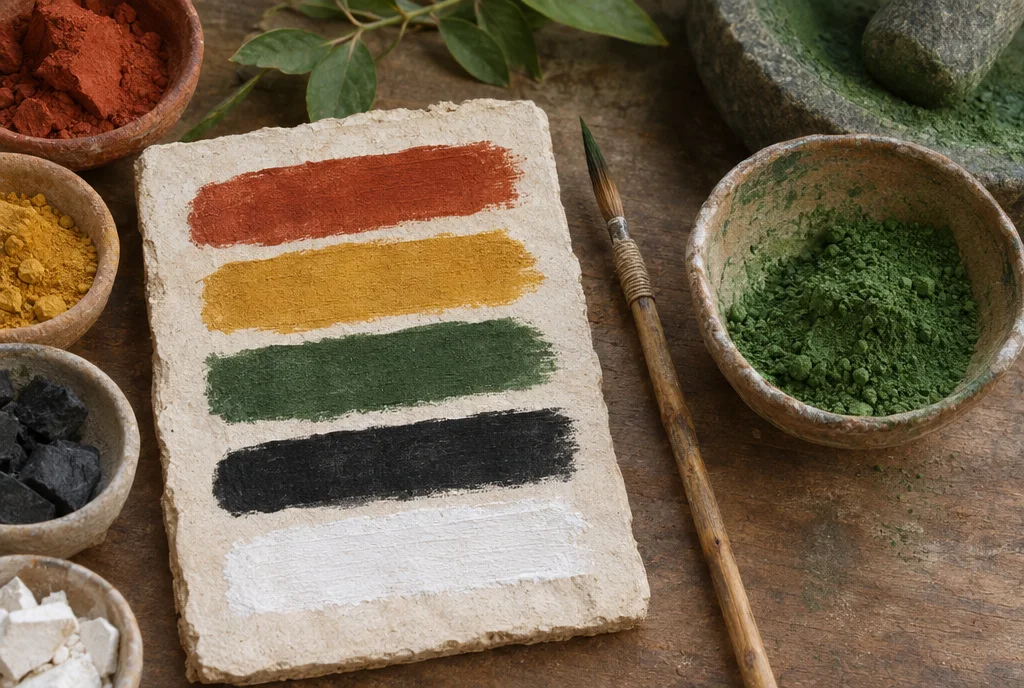
The colours do not behave alike. Red ochre grinds quickly. Green cannot be hurried at all — worked too fast, it dries dull, and the whole batch has to be thrown away. Every batch is tested on a small board before it goes anywhere near the painting, because natural colour changes from one batch to the next.
Why not just use manufactured paint?
On the first day, few people could tell the difference. The painters who still work this way say the difference shows after ten years and more: natural earth colours hold their character, age gently and sit into the surface rather than on top of it. It is also how the tradition has always been made, and for many painters that matters as much as the result.
What this means for the price
When you see the price of a hand-painted mural made with natural pigments, you are paying for those days of preparation as well as the painting itself, and for skills that take years to learn. It is the kind of detail that explains a price better than any amount of marketing.
Read more about the tradition in Kerala mural painting: a temple tradition that found its way home, and see devotional and mural-style works in the Spiritual and meditation spaces collection.