Kerala mural painting: a temple tradition that found its way home
Five colours, made from earth, leaves and lamp soot, and a way of painting gods that has been handed down for centuries.
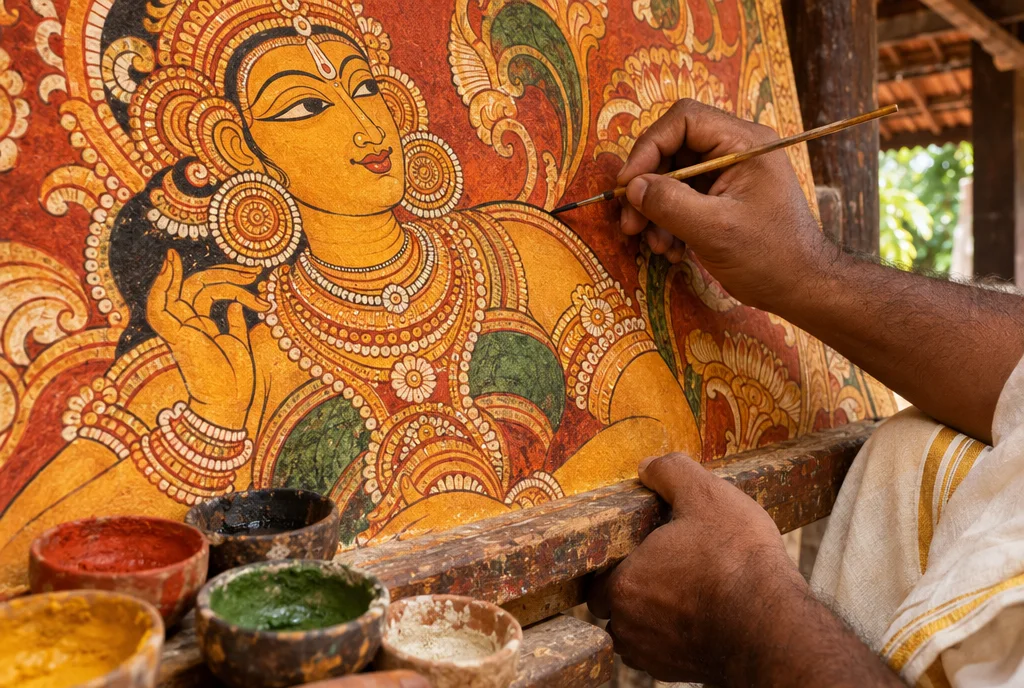
Walk into an old temple or palace in Kerala and you may find walls covered with gods, goddesses and scenes from the epics, painted in deep reds, yellows and greens with strong black outlines. These are Kerala murals, one of India's great painting traditions — and today they are no longer only on temple walls.
Where the murals come from
Kerala's mural tradition grew in temples and palaces over many centuries, with the support of temples and royal families. Some of the best-known paintings can still be seen at the Mattancherry Palace in Kochi, famous for its Ramayana scenes, at the Padmanabhapuram Palace, and in temples such as Ettumanoor and Vadakkunnathan in Thrissur.
The subjects are mostly devotional: Ganesha, Krishna, Shiva, Devi and stories from the Ramayana and Mahabharata. The figures have large, expressive eyes, rich jewellery and flowing garments, and every space around them is filled with leaves, flowers and patterns.
Five colours: panchavarna
Traditional Kerala murals use five colours, known as panchavarna, all made from natural materials:
- Red and yellow from red and yellow laterite earth.
- Green from plant extracts.
- Black from the soot of an oil lamp.
- White from lime — often simply the prepared wall itself.
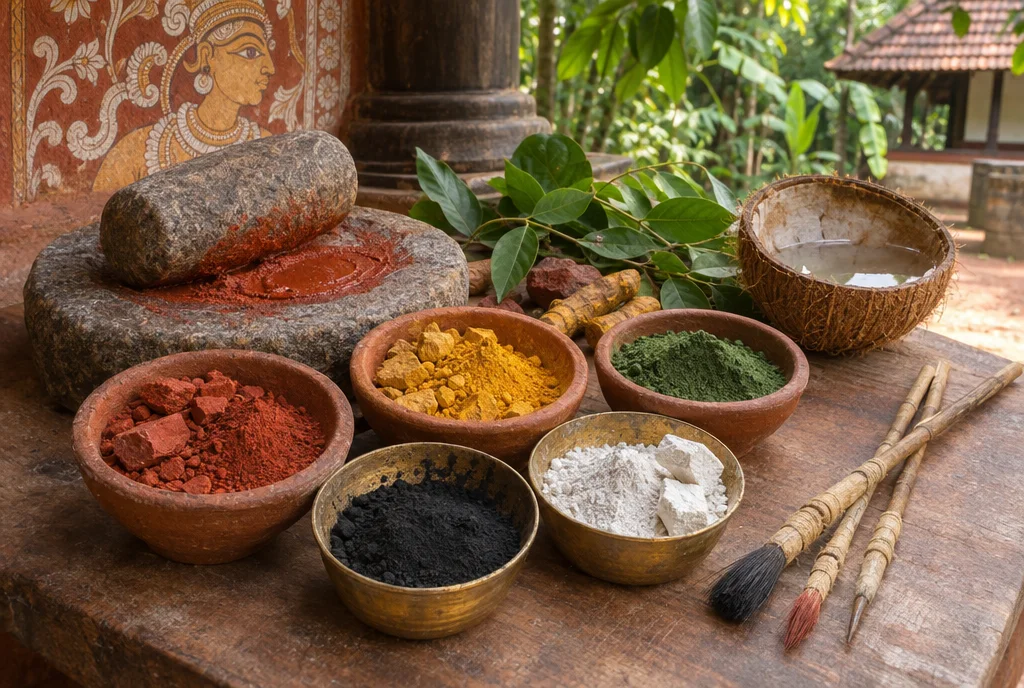
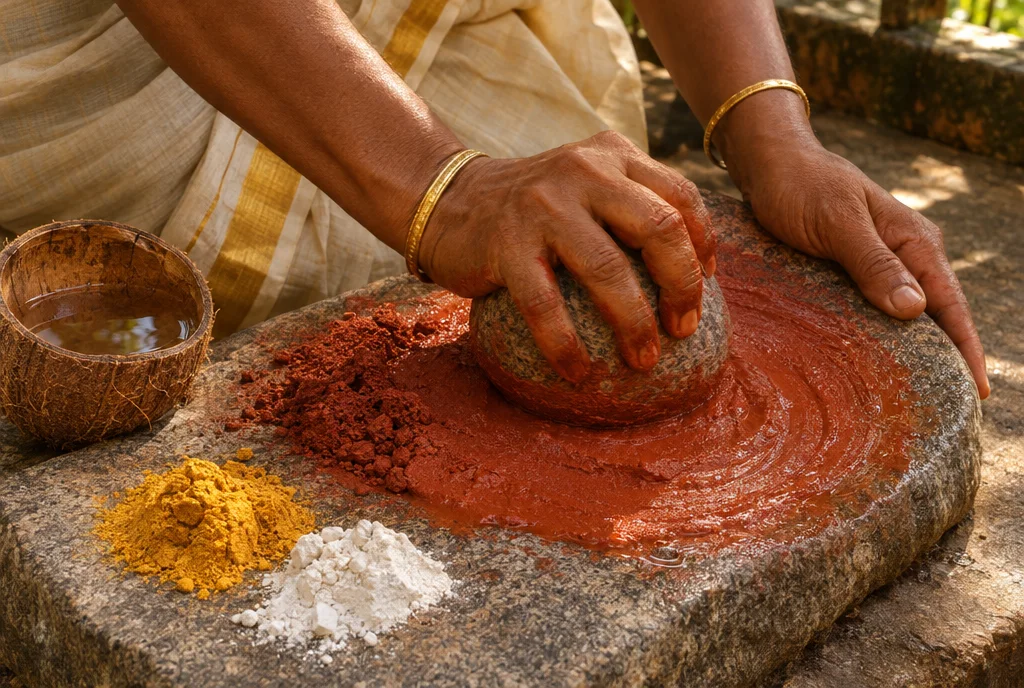
The colours are ground by hand and mixed with natural binders such as tender coconut water. Brushes were traditionally made from grass and plant fibres. Preparing the wall alone takes days: layers of plaster finished with many thin washes of lime.
How a mural is painted
The painter first draws the outline, usually in yellow or red ochre. Colours are then filled in, from light to dark, and finally the figure is brought to life with a strong black outline and fine detail in the jewellery, hands and eyes. The proportions of each figure follow rules set down in traditional texts, which is why the style is so recognisable.
From temple walls to homes
After independence, schools set up in Kerala, including the mural painting centre run by the Guruvayur Devaswom, began training a new generation of painters. Many of today's mural artists paint on canvas and cloth as well as walls, so the tradition can now hang in a pooja room, a living room or an office reception.
If you bring a Kerala mural home, give it space. These are strong, detailed pictures that look best on a wall of their own, with soft, even light — and they carry a sense of calm and blessing into any room.
You can find mural-style and devotional works in the AARTY shop and in the Spiritual and meditation spaces collection.