A year of taking work in
What the studio learned from a first year of consignment, including the parts that did not work.
For most of the past year, AARTY has taken original work in on consignment. It has taught us more about how art actually sells than anything we planned on paper. These are the notes we keep coming back to.
What consignment means
Consignment means the maker keeps ownership of the work until it sells. The studio shows it, photographs it, offers it to buyers and handles the sale; the maker is paid when a buyer pays. Nobody has to buy stock up front, so a maker can place work with us without giving it away.
It also means the maker carries the risk of the work not selling. That is a harder conversation than it sounds, and it is one worth having honestly on the day the work comes in — not in month eleven, when it has become a disappointment.
Why twelve months
We agree a twelve-month period with each maker, because original art is slow. A piece can sit quietly for eight months and then sell twice over once it lands in the right home or the right project — a hotel lobby, a new office, a designer's client.
Had we called work back at six months, several makers would have lost a sale. Patience is part of the service, and we would rather say so at the start than apologise for it later.
What did not work: letting photography wait
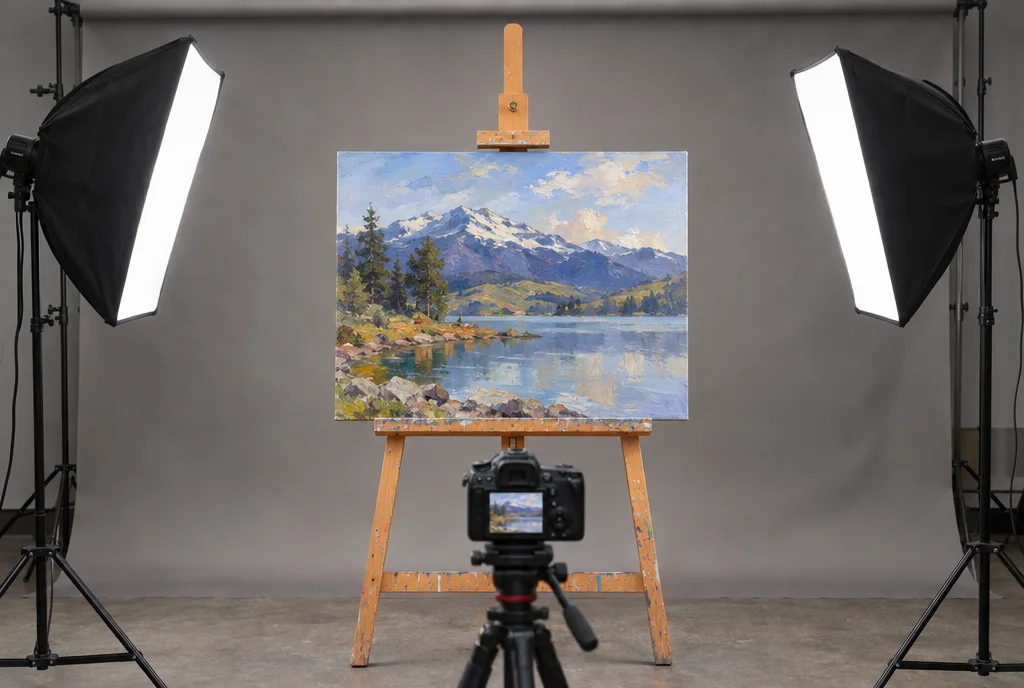
Our biggest mistake was assuming photography could wait until things were quieter. It cannot. A work without proper photographs does not sell, however good it is. Every month a piece sits unphotographed is a month of someone else's property on our wall doing nothing for them.
So now a work is photographed in even, controlled light within days of arriving, before it goes anywhere else. Colour, texture and edges are checked against the original, so what a buyer sees on screen is what arrives at their door.
What we changed
- Clear terms on day one. Period, price, what happens if it sells and what happens if it does not — written down and agreed before the work is accepted.
- Photograph first. No work goes on the wall or online until it has been properly photographed.
- Regular updates. Makers hear from us about views, enquiries and interest, not only when something sells.
- Honest feedback. If a piece is not moving, we say so and suggest what might help: a different size, a different room, a different price, or a different collection.
If you make original work and would like to place it with the studio, start with Send your work. We will talk through the terms before anything is agreed.