
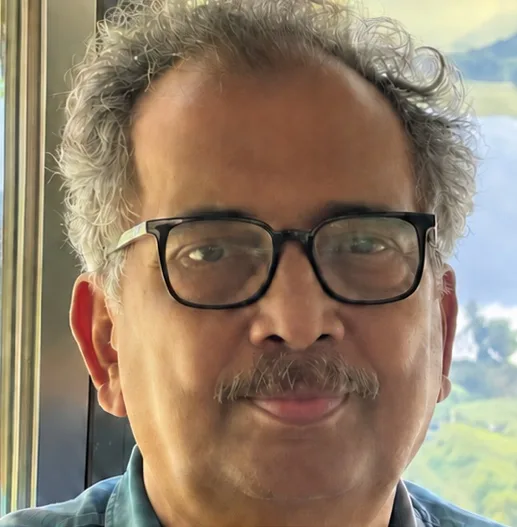
- Discipline Painter
- Works with AARTY Professional painters and sculptors
John Joseph
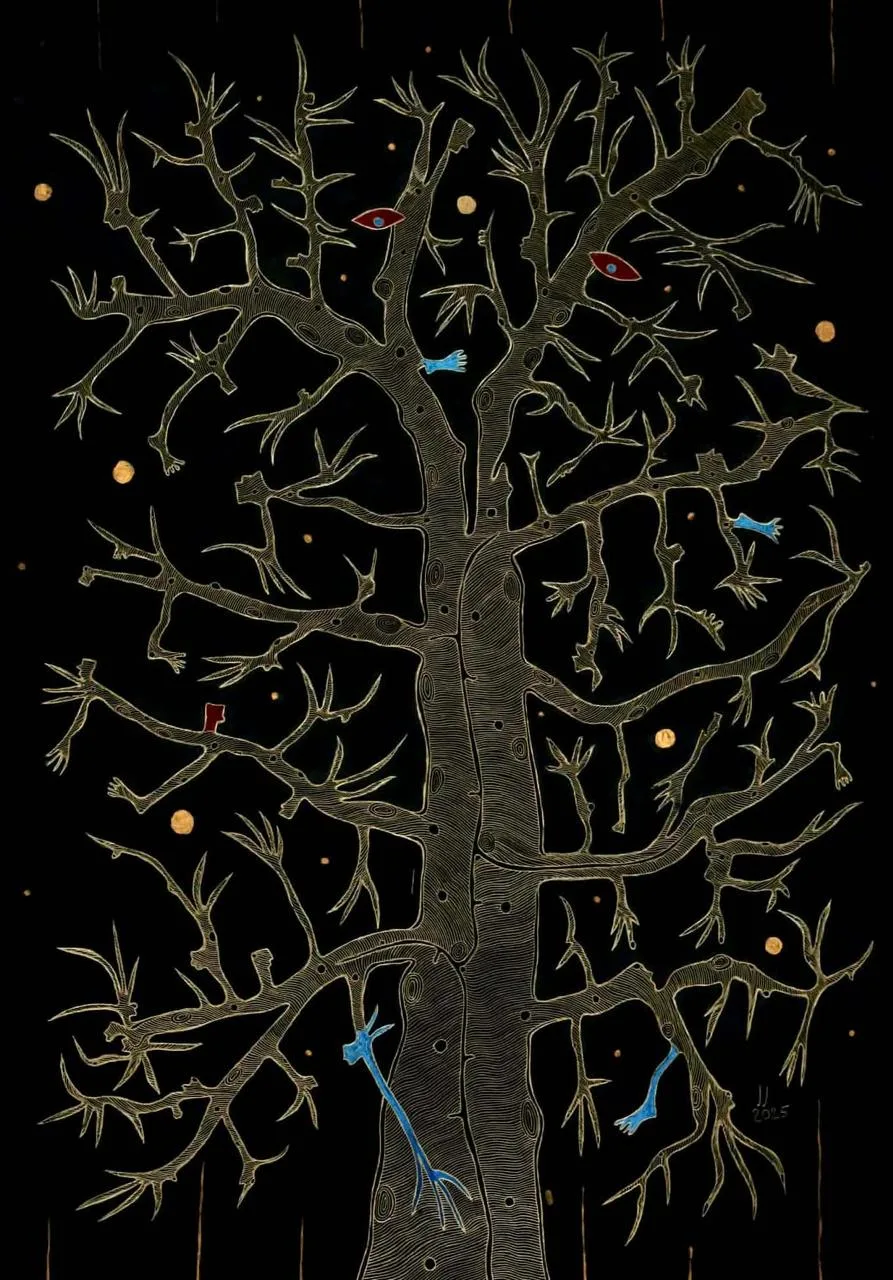
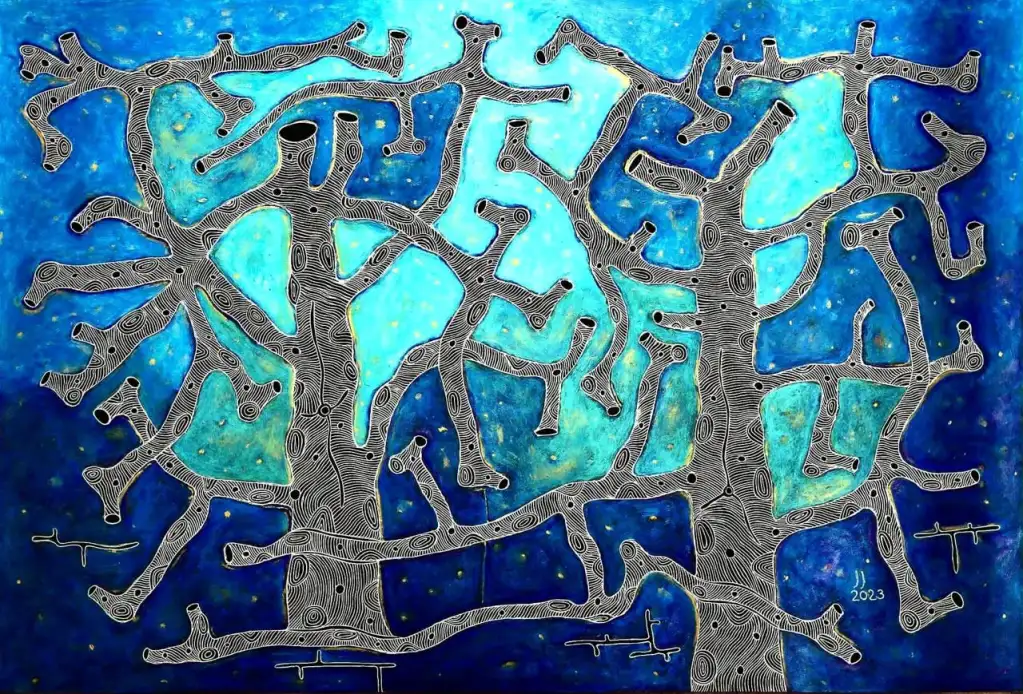
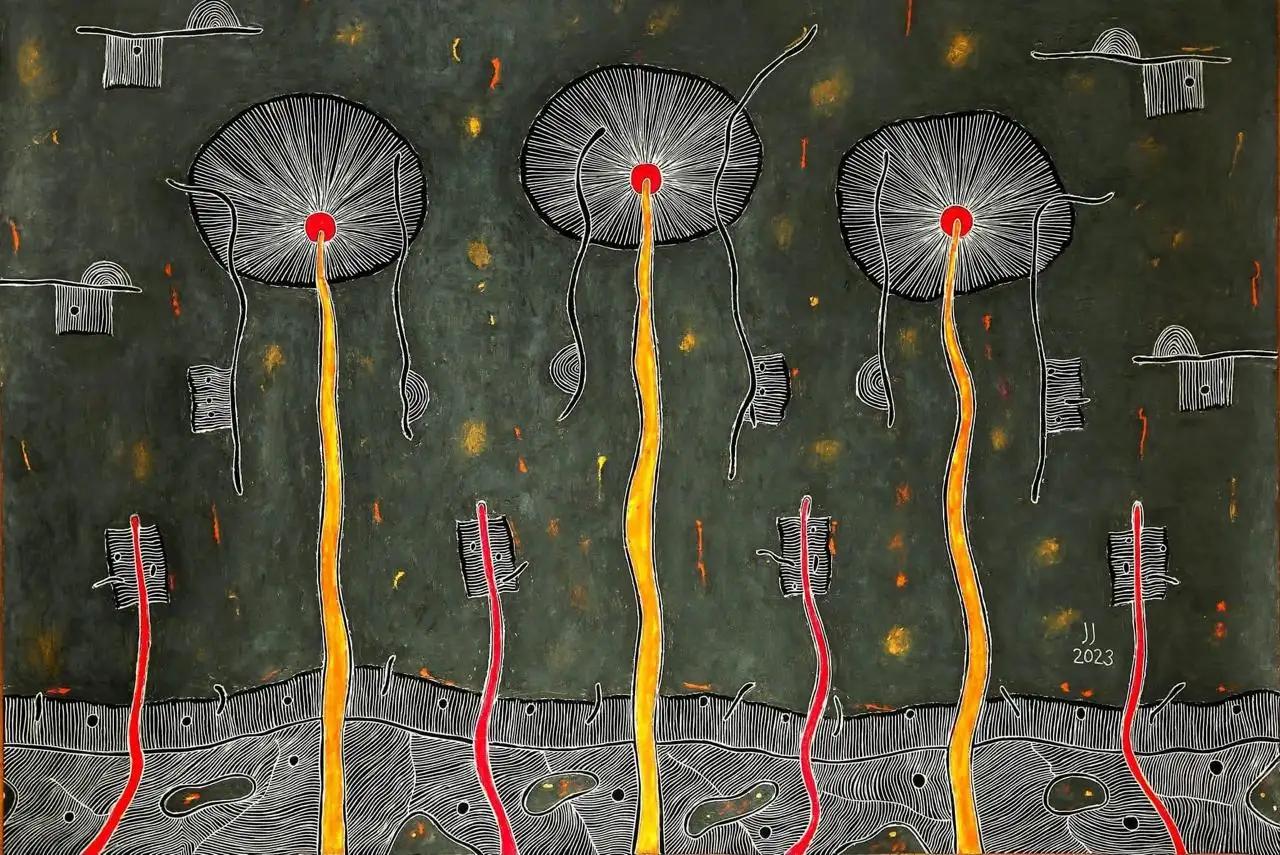
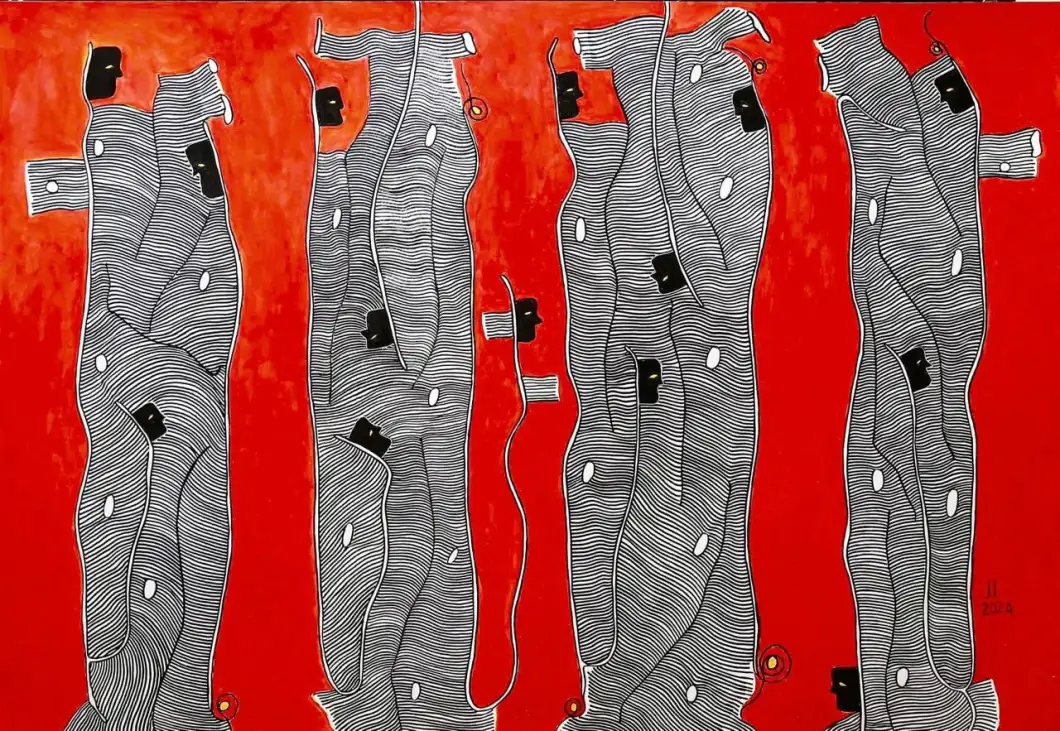
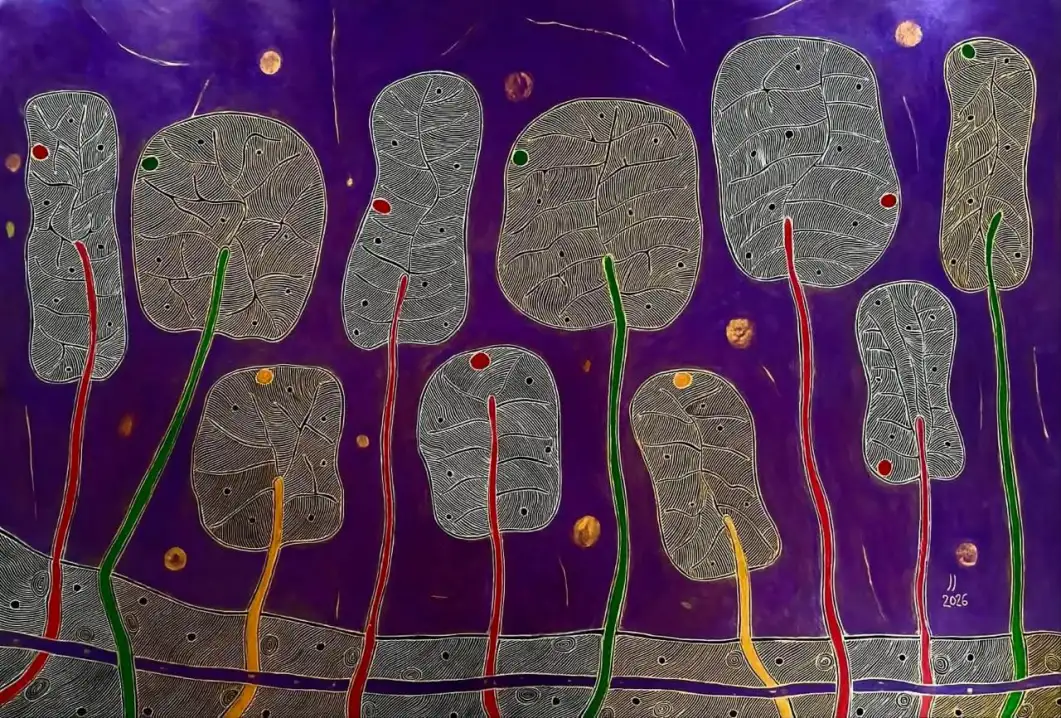
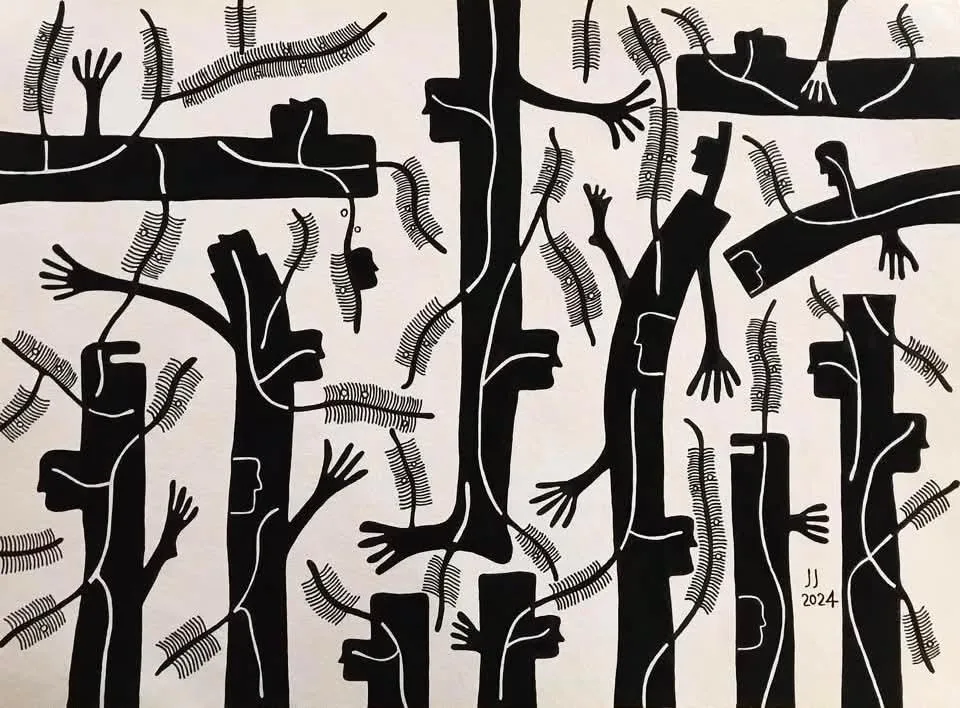
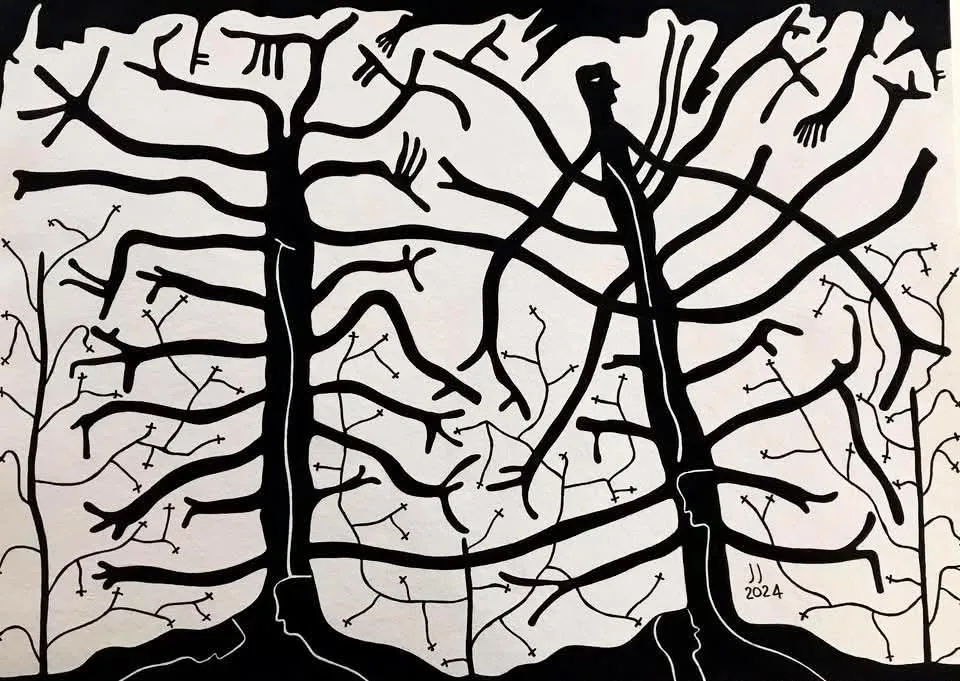
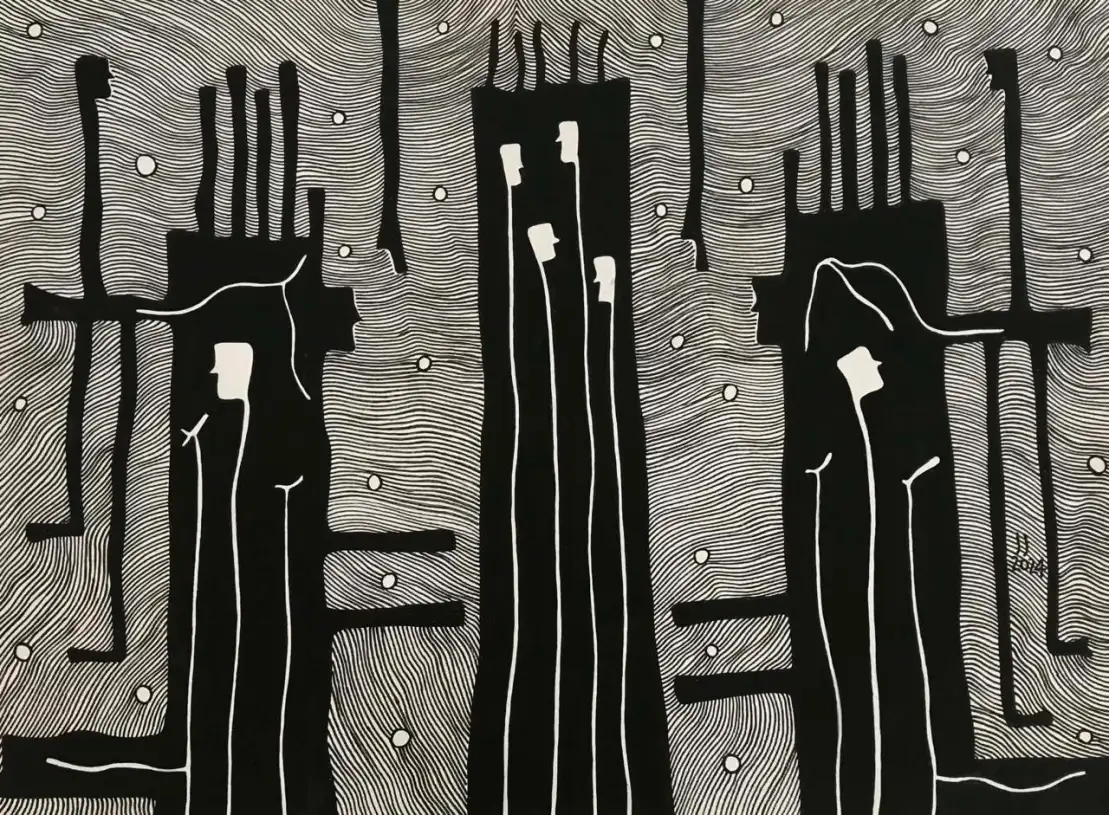
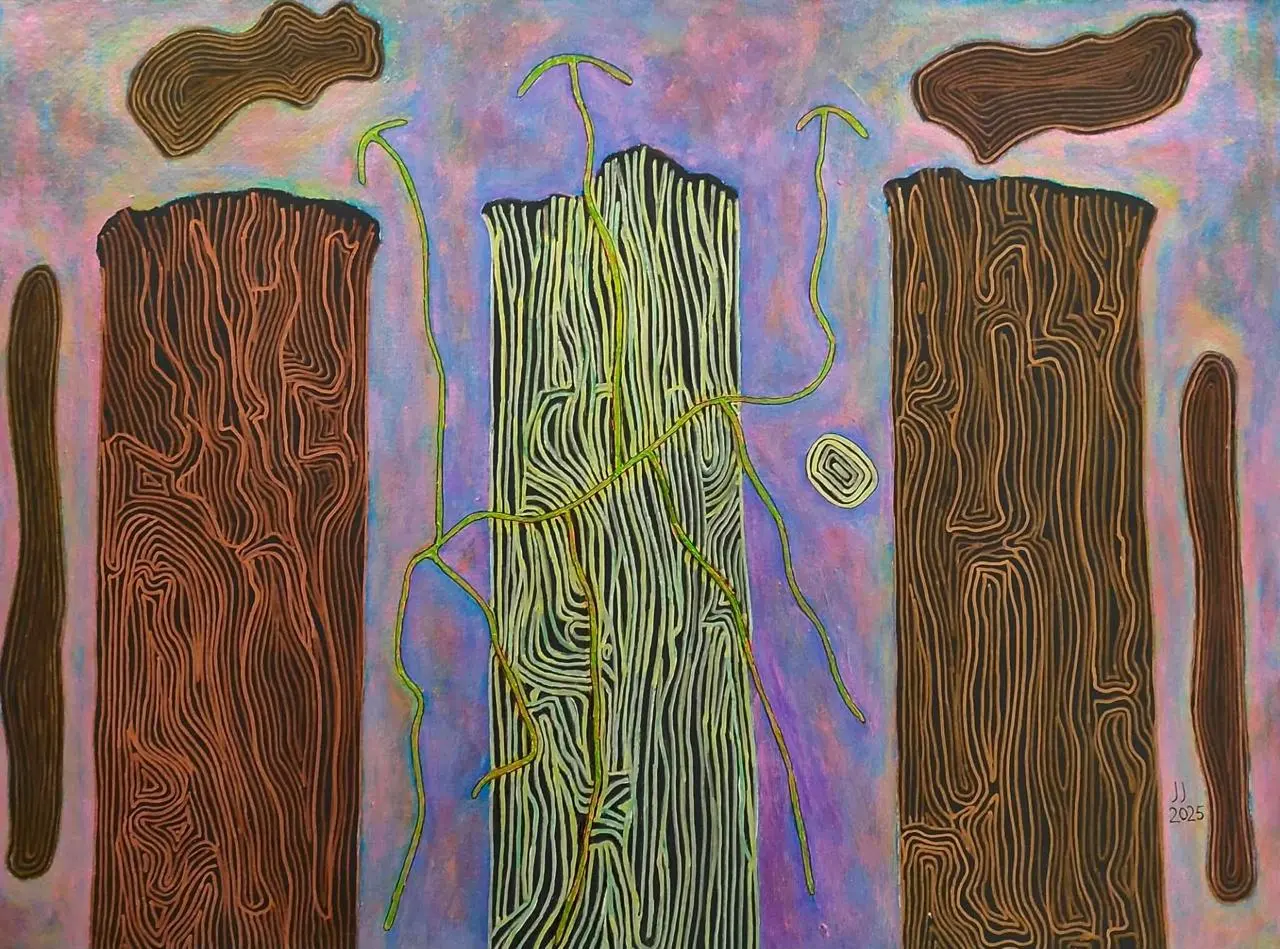
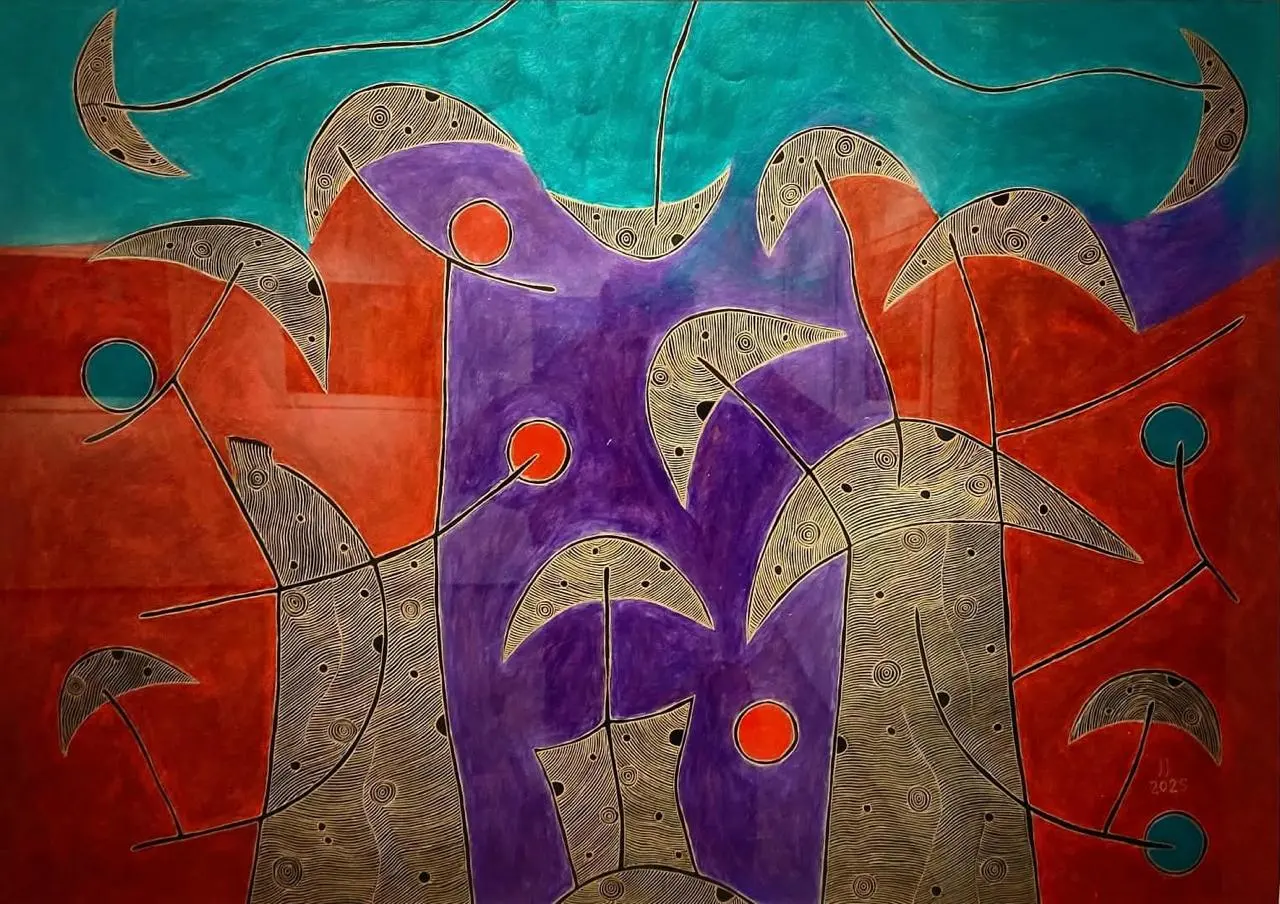
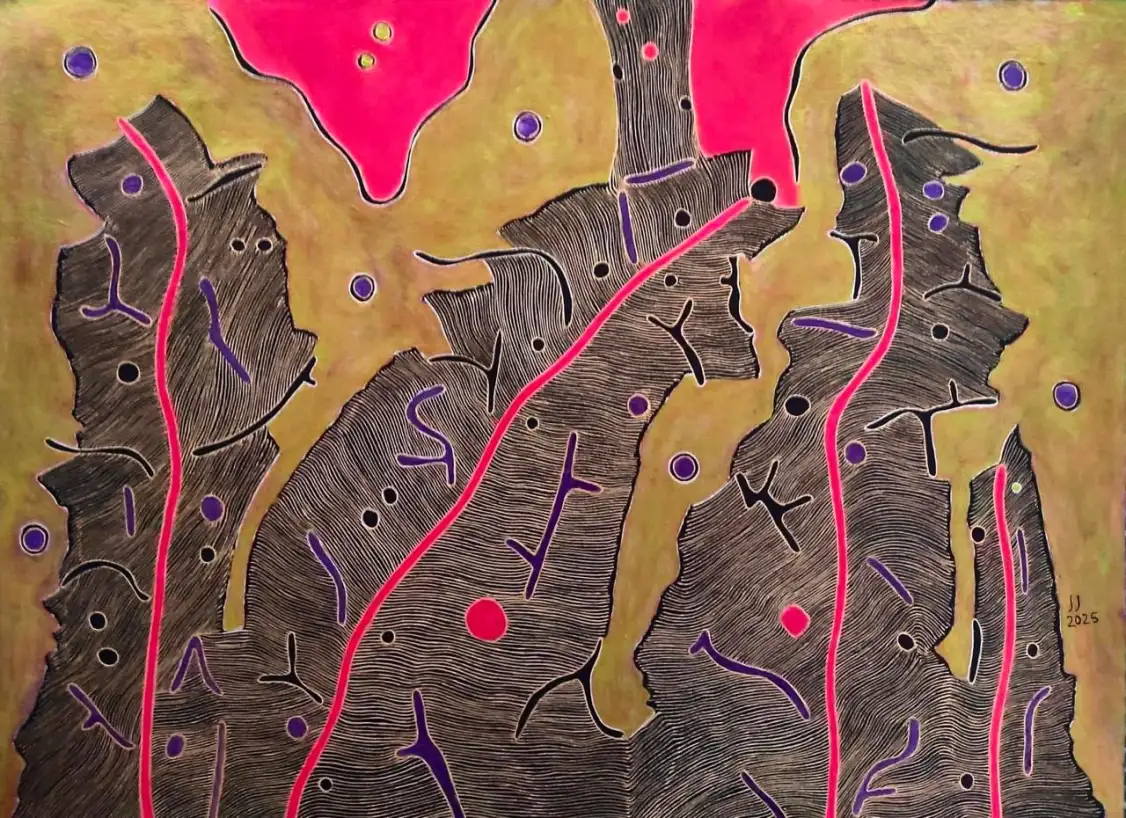
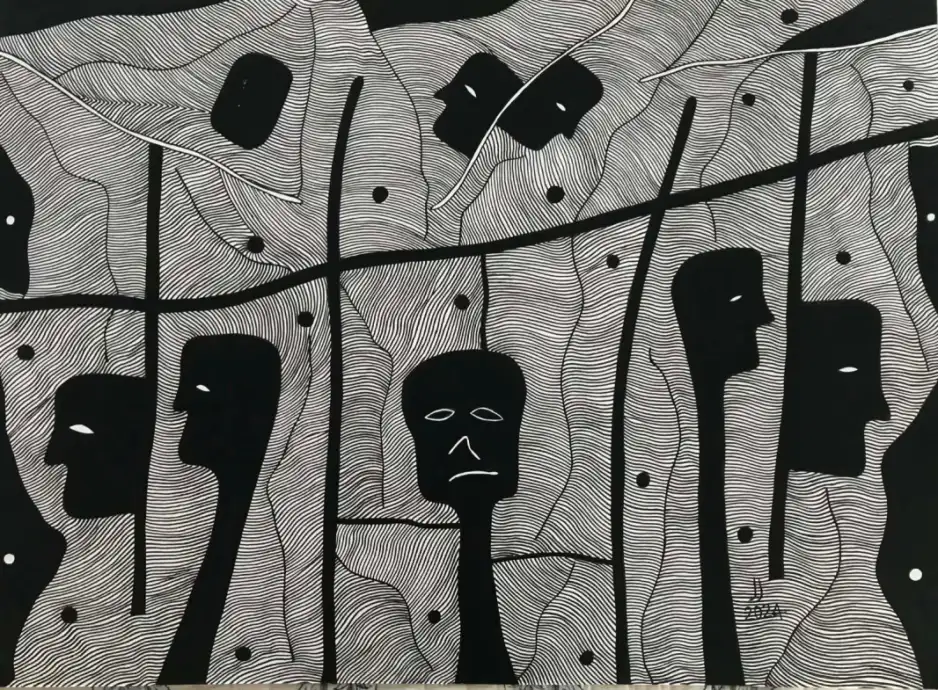
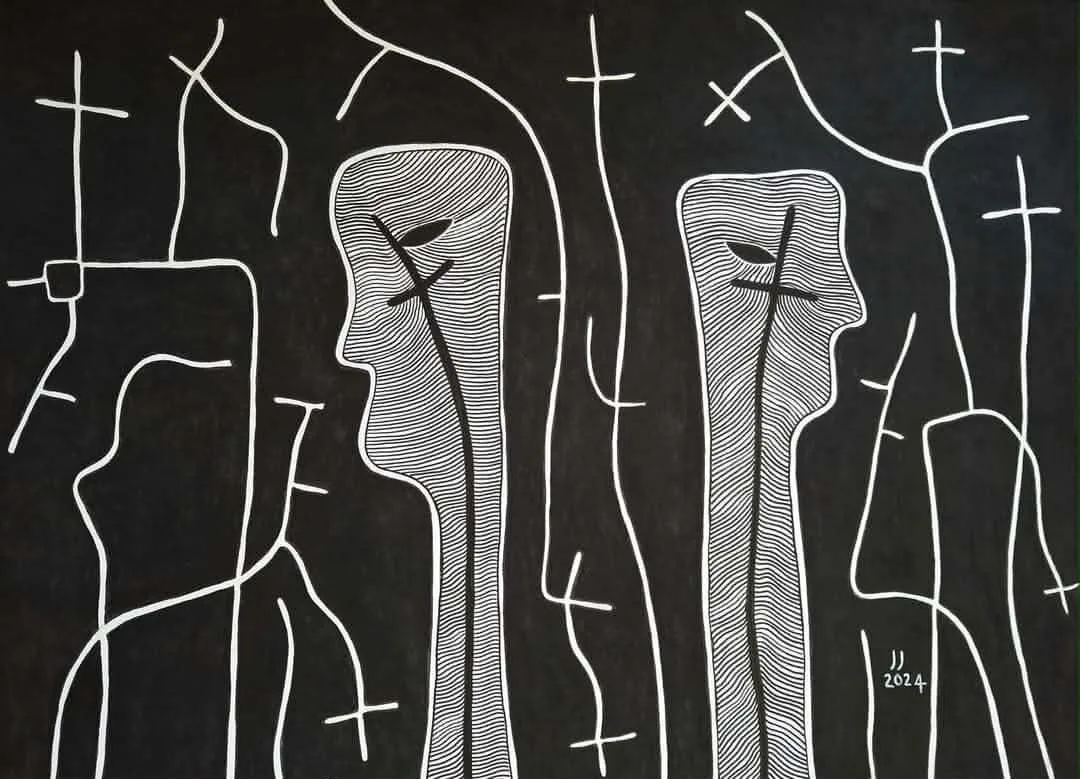
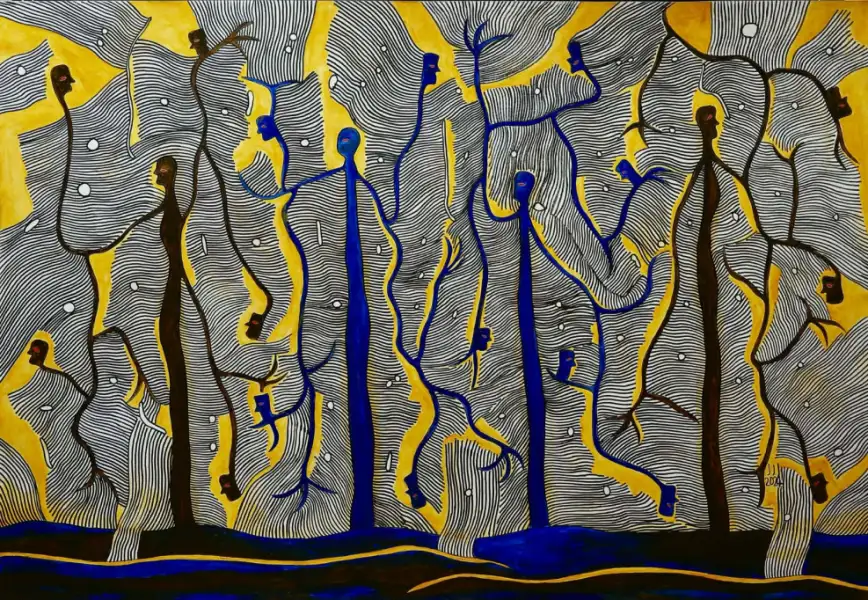
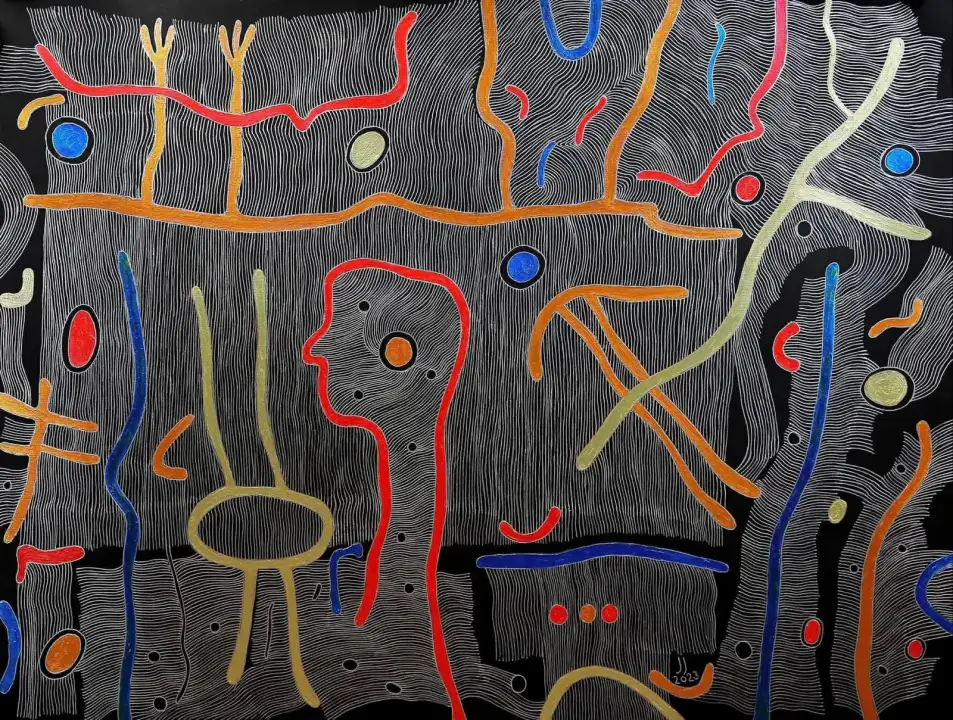
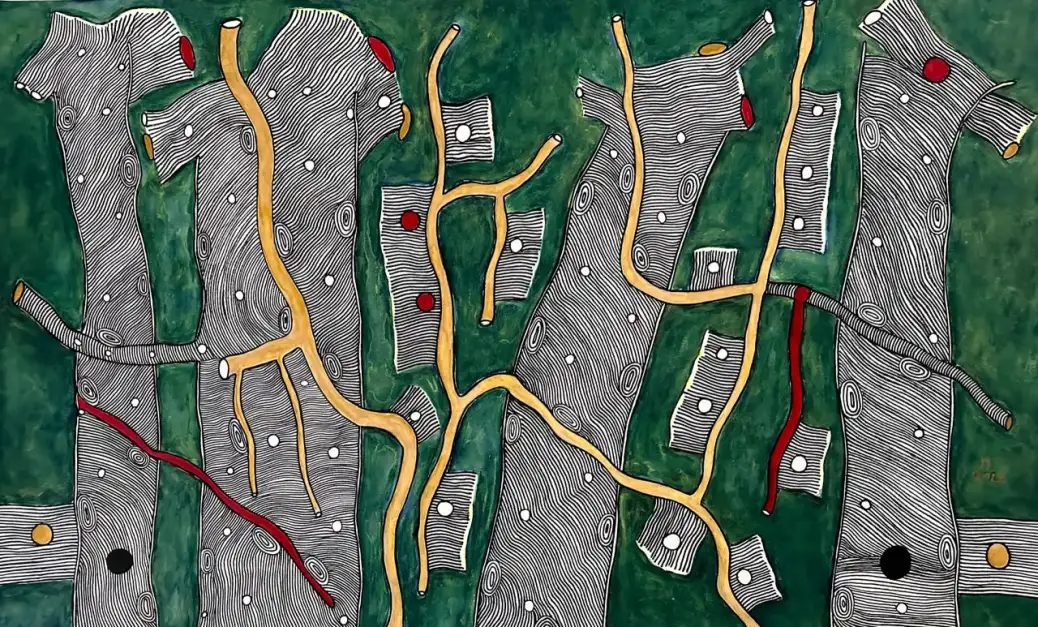
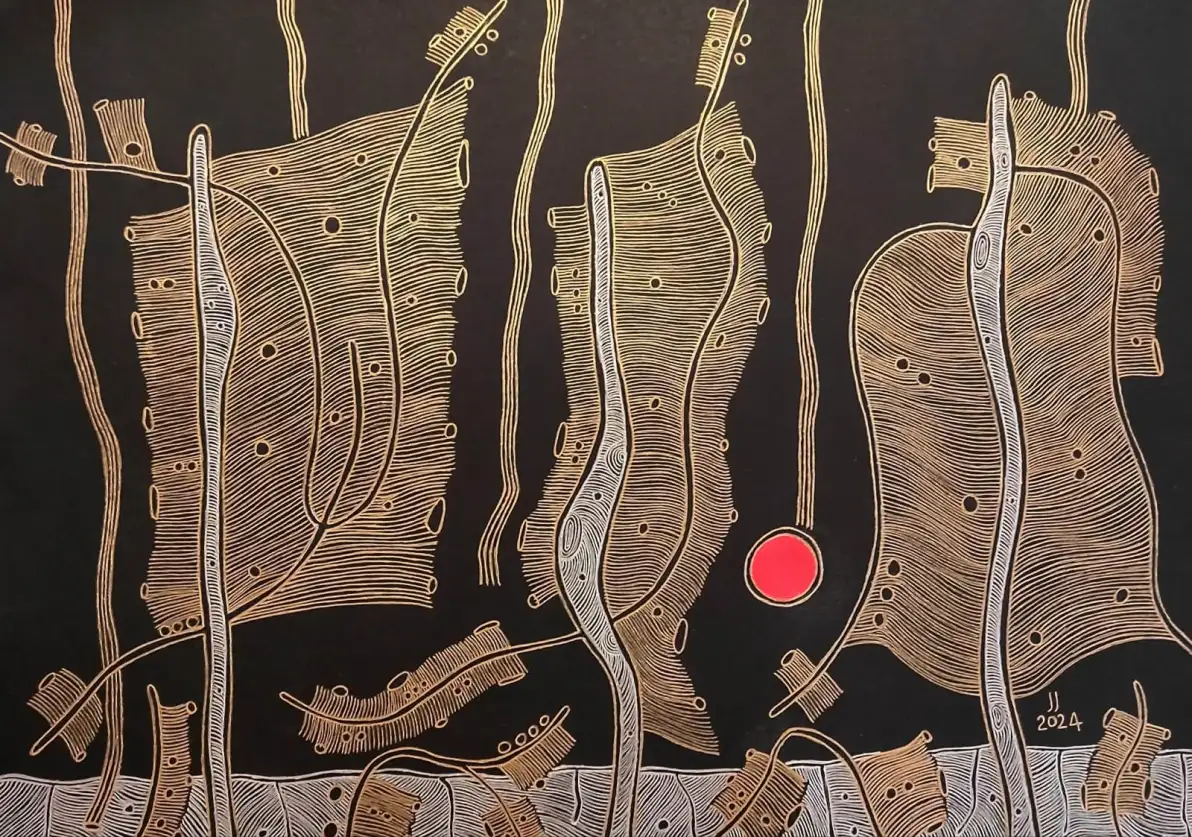
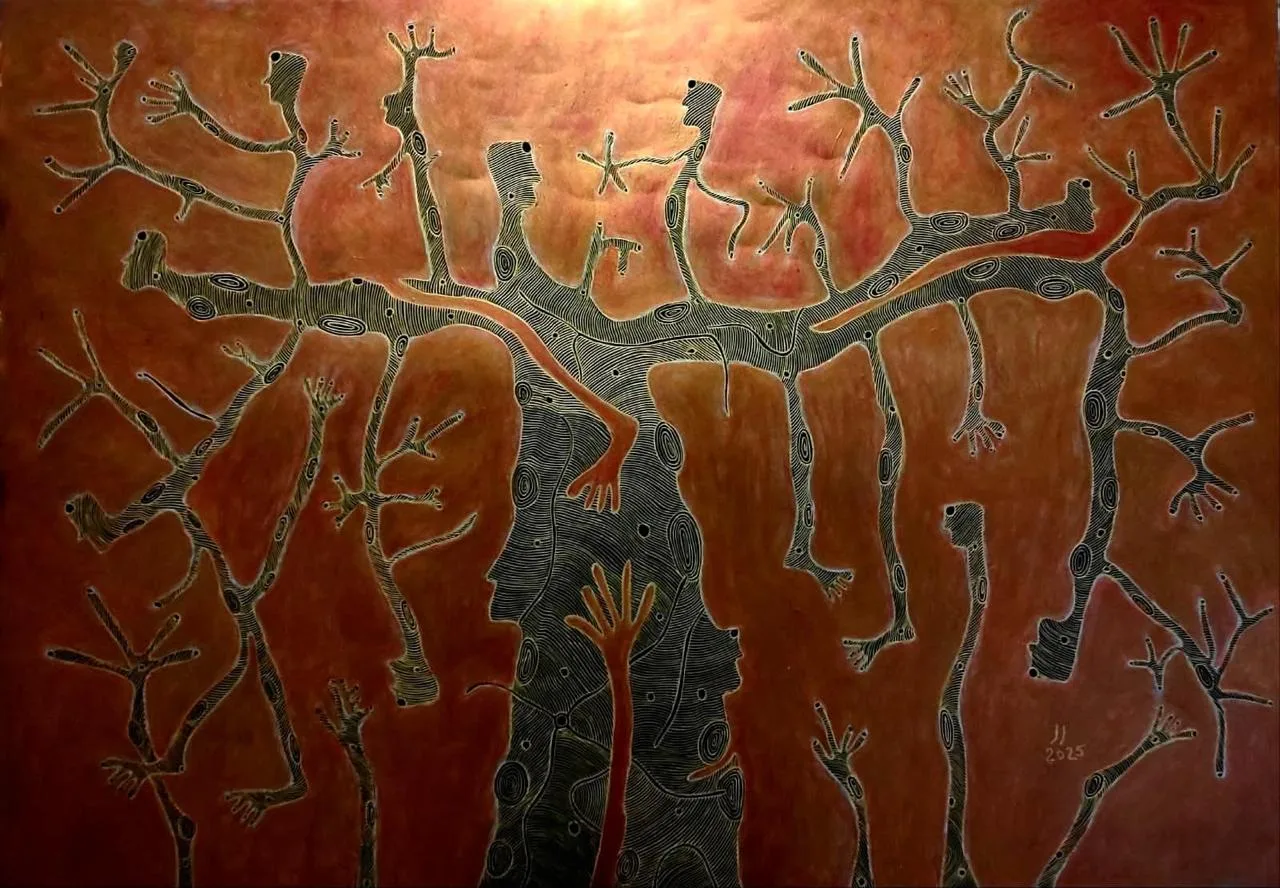
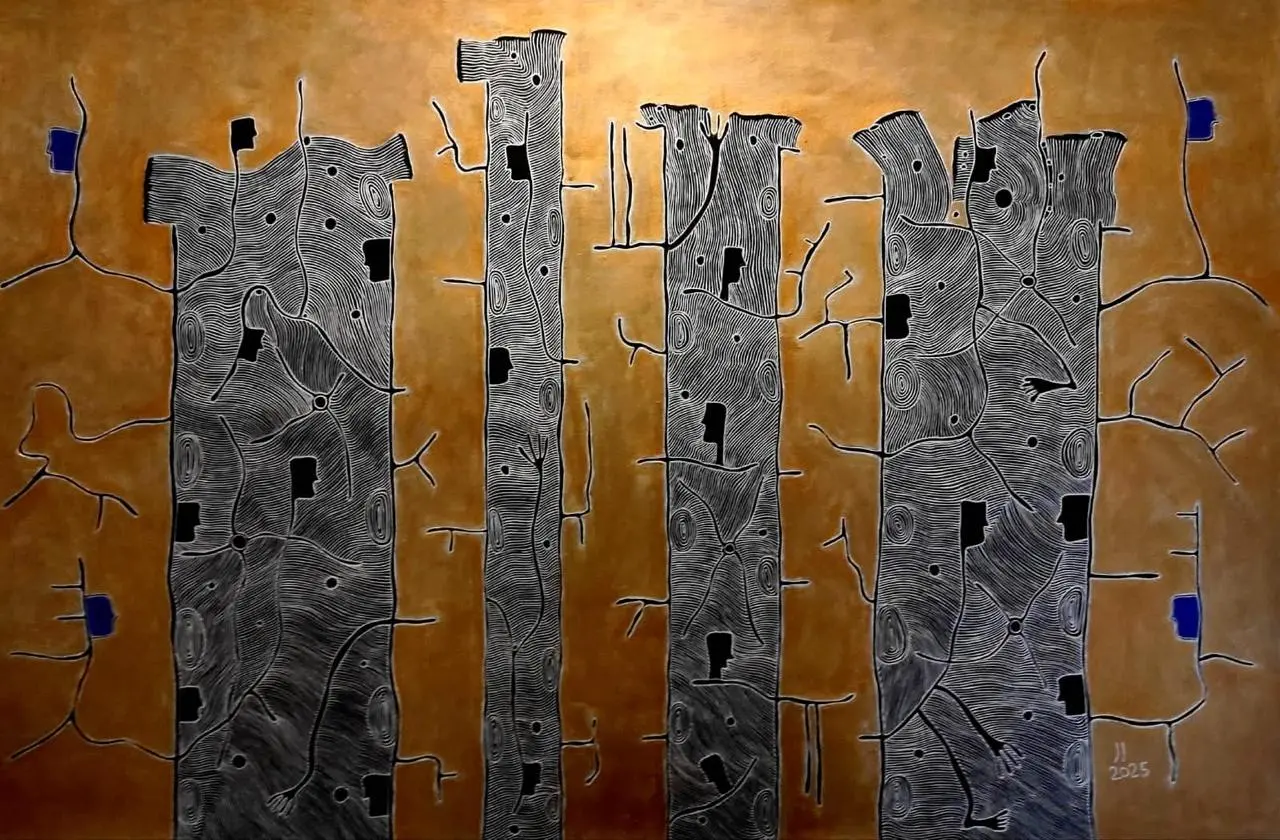
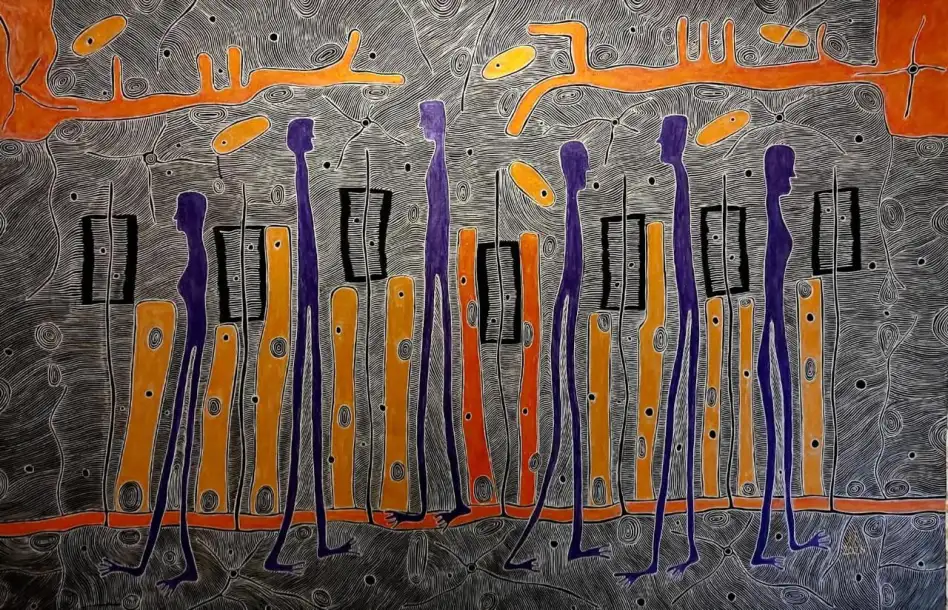
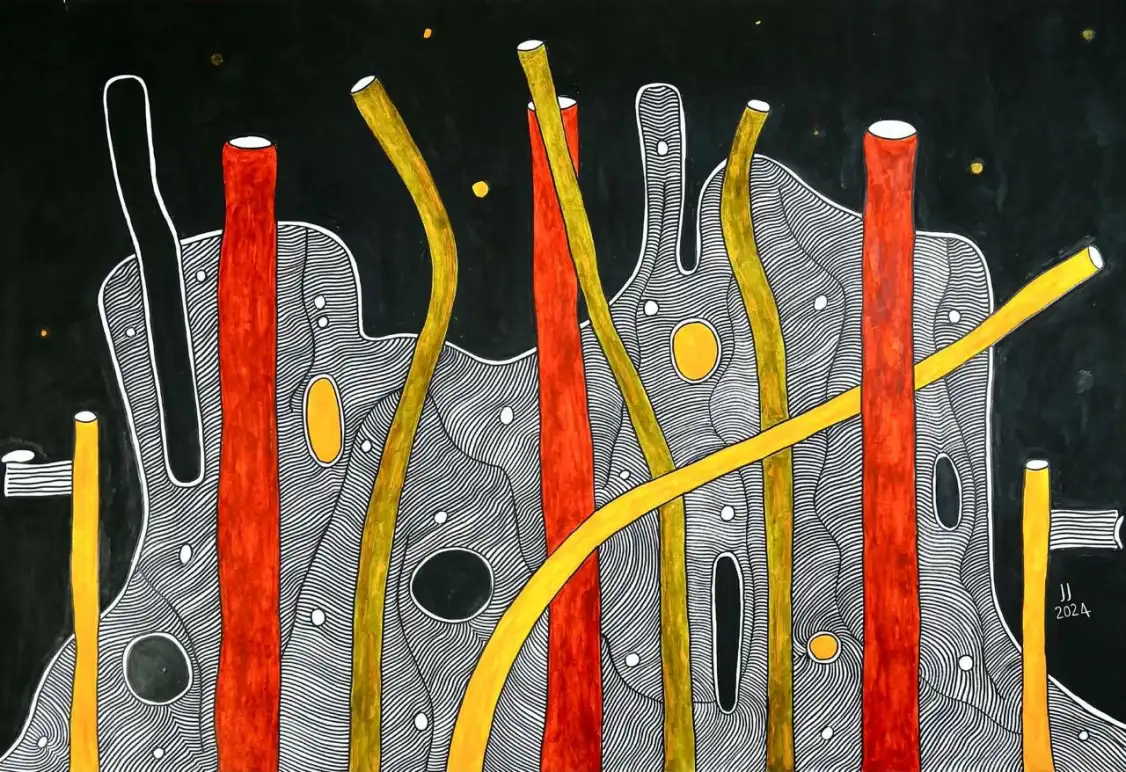
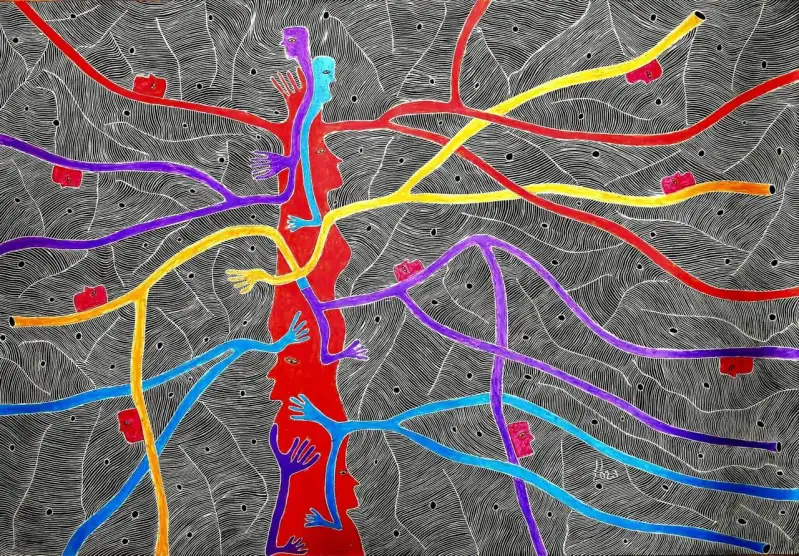
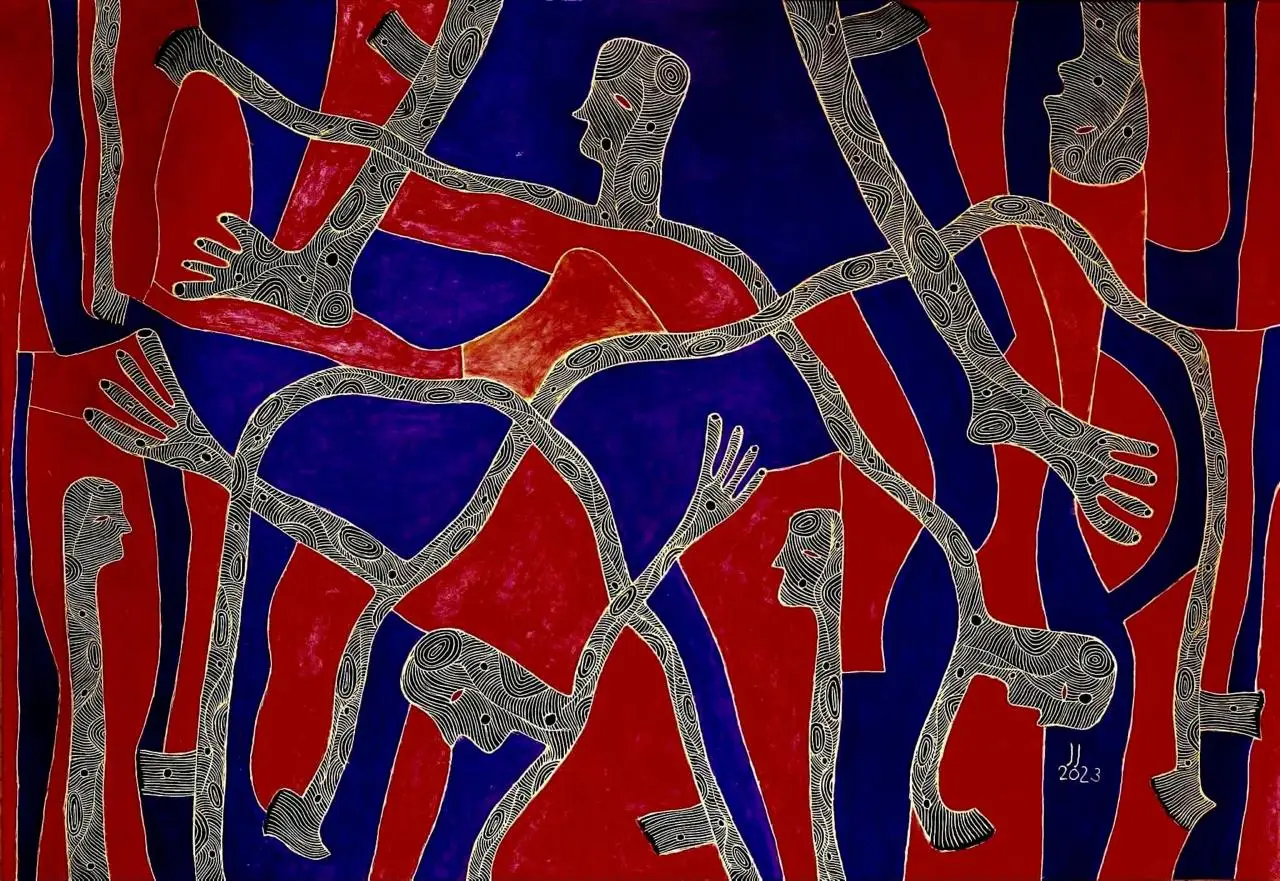
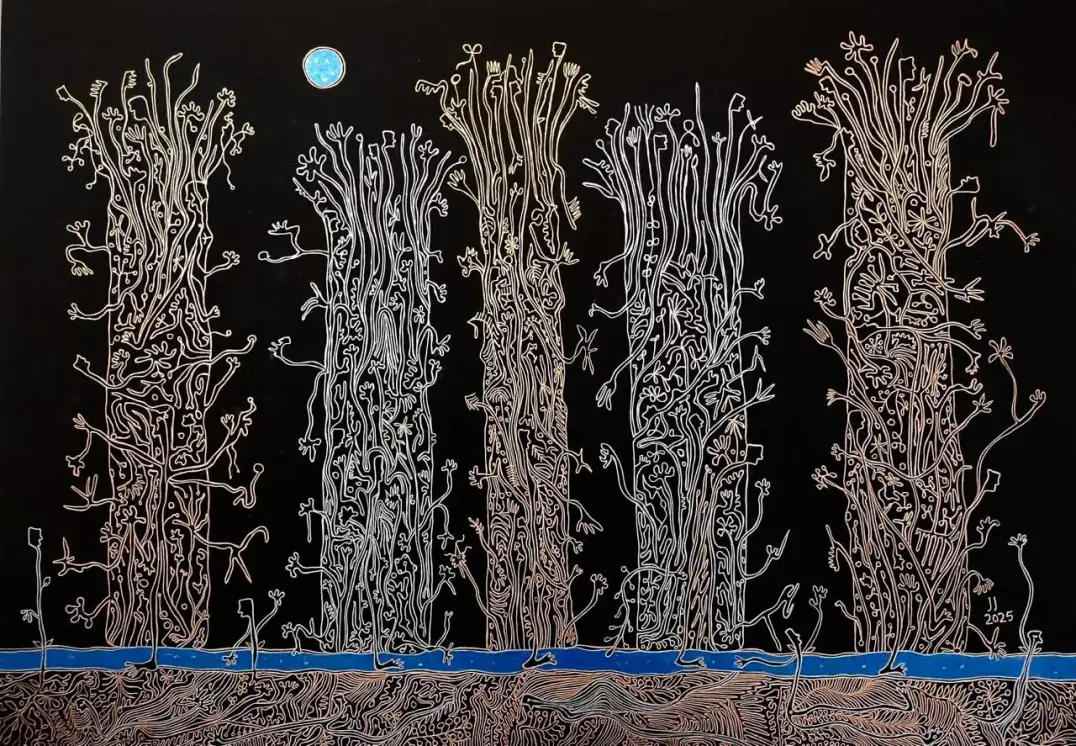
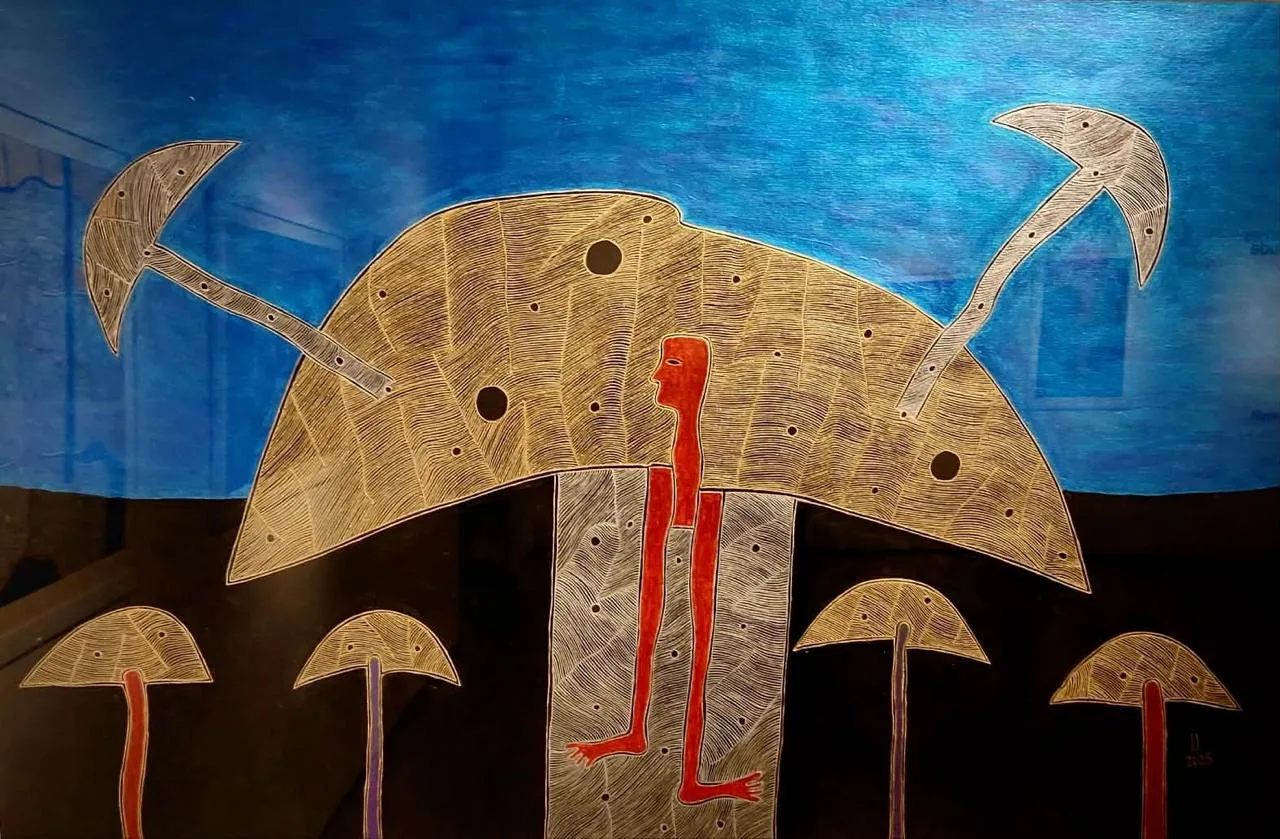
Branching forms, spare human faces and fine linear patterns recur across John Joseph’s paintings. Tree-like structures can acquire hands or profiles, while grey passages meet fields of red, blue, purple and gold. These recognisable yet unsettled forms suggest a world shaped as much by inward experience as by observation.
Joseph describes his paintings as frames of his mind. Images passing through everyday experience can linger, disturb or inspire him, becoming starting points for an instinctive process that may move beyond its initial frame. His statement responds to social disparities, selfishness and inhumanity, while giving personal feeling room to develop through the act of painting.
His artistic journey began during his college years at Maharaja’s College, Ernakulam, in the 1970s. Early recognition included selection by C. N. Karunakaran as best artist in a college exhibition and a best artist award in the P. J. Cherian memorial art contest. Painting has remained central to his life through exhibitions, workshops, art camps, discussions and travel in India and abroad.
A major distinction is the 2023 Tagore National Award for Painting, organised by Rabindranath Tagore University, Bhopal, and Vishwarang Foundation. His solo exhibitions include presentations in Ernakulam and Pondicherry, with a show at Durbar Hall Art Gallery, Ernakulam, in July 2025.
International exchange forms another part of his practice. In 2021, he participated with L’Art du Nouveau Monde in France in a collaborative project involving 111 artists from 38 countries. His work was used on the project catalogue’s cover. His exhibition record also includes the Incheon Metropolitan City Art Exhibition, the Geoje International Art Festival and the Busan International Environmental Art Festival in South Korea.
His statement records works in the collections of the Fantapia M Chang Kil-Hwan Art Museum and Haegeumgang Theme Museum in South Korea, alongside collectors in India and overseas. These connections extend a practice rooted in a personal vocabulary of image, line and feeling: an attempt to give the mind’s passing frames a lasting visual presence.
Currently in the collection
The catalogue
John Joseph’s works in a square 9 × 9 inch book: the artist’s story, then each painting with its title, details and a link to it online. It keeps itself up to date as new works join the collection.